
Craft
Satin Stitch: The Most Fundamental Technique in Chinese Embroidery
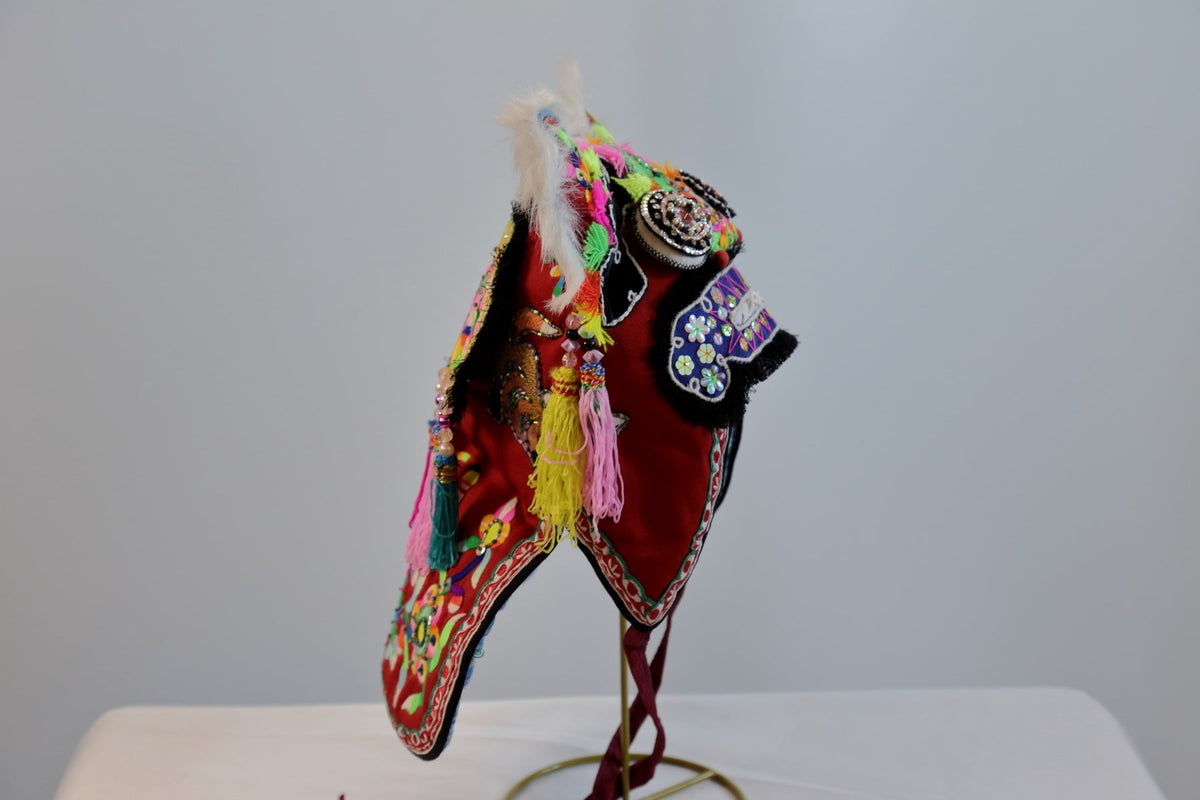
Among the many techniques of traditional Chinese embroidery, satin stitch is the most basic and the most commonly used. Its name tells you its characteristic — flat. Stitches arranged evenly, thread paths smooth, the embroidered surface as level as a mirror.
The technique of satin stitch is not complex. The needle comes up through the fabric, then pierces down ahead, and is pulled tight — one stitch done. The next stitch sits right beside the previous one, arranged in sequence, until the entire pattern is filled. It sounds simple. But to do it well requires patience and a feel for the craft. Stitches must be even — not too long, not too short. Thread tension must be consistent — not too tight, not too loose. The edges of the embroidered surface must be clean — no fraying. These requirements rely entirely on years of accumulated experience.
Satin stitch is widely used on tiger hats. The tiger's brows, nose bridge, and ear outlines are often rendered in satin stitch. Because it can produce smooth lines and crisp edges, it is especially suited to expressing the tiger's dignity. The surface of satin stitch is smooth, and when light falls on it, it creates a soft reflection that makes the tiger's features look more alive. On tiger hats, satin stitch is often combined with seed stitch and gold-thread embroidery. Satin stitch handles large-area filling and line work. Seed stitch handles details that need dimension, like the eyes. Gold-thread embroidery handles the trim that needs emphasis. Three techniques, each with its own role, together completing one full tiger face.
The English translation of "平绣" is "satin stitch." In Western embroidery traditions, there are similar techniques. But Chinese satin stitch places more emphasis on the arrangement and transition between threads, pursuing a sense of overall harmony. It does not pursue the prominence of a single stitch, but the balance of the whole picture. This aesthetic is in line with the traditional Chinese concept of "harmony."
The satin stitch on a tiger hat may look unremarkable. But it is precisely this "flatness" that carries the tiger's authority and gentleness, and a mother's whole heart for her child.
Every stitch is a breath of love.